 |
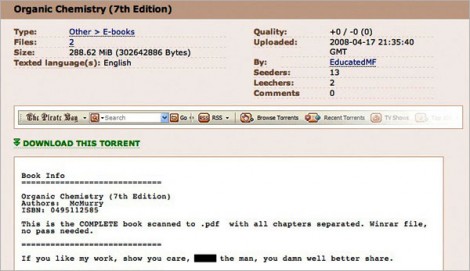
| A textbook found on piratebay.org, a popular file-sharing site. Photo taken from the New York Times. |
"I have paid literally thousands of dollars to [textbook distributors]," Boll told the Daily 49er. "I can't afford to line their pockets this semester, and I don't think they should really blame me."
The textbooks come from a variety of sources: some are hacked versions of official digital copies, allowing for unrestricted copying and distribution, others are uploaded by a determined set of students who physically scan library copies of the textbooks.
Even some professors are tacitly supporting textbook piracy. "I do not go so far as to provide them with copies, but at the start of every semester, I make it very clear to my students that there are free copies of their $200 textbook on the internet," an anonymous CSULB professor told the Daily 49er.
In response, several major textbook publishers have initiated legal action. Recently, a court found popular file-sharing site Rapidshare liable for hundreds of thousands of dollars in fines for textbooks illegally hosted on their site. Publishers have also threatened students with legal actions if they did not pay a settlement.
Further Reading:
NY Times

No comments:
Post a Comment